AI and robotics give aircraft inspection new wings

A joint innovation project by Sentigrate and ACRATS Europe
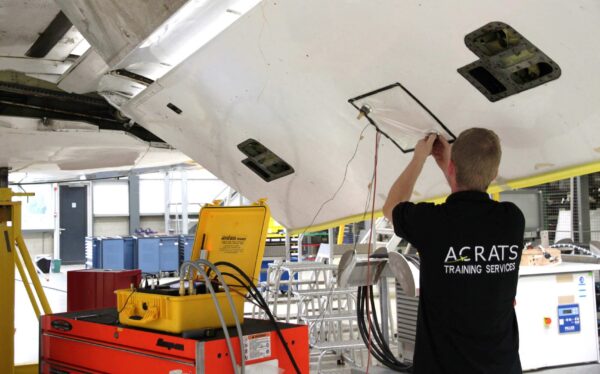
Aircraft are becoming lighter and more fuel-efficient, largely thanks to the increasing use of composite materials. While this shift brings clear performance benefits, it also introduces new challenges for aircraft inspection and maintenance. Damage such as hairline cracks or internal delamination is often invisible, yet safety standards leave no room for uncertainty. At the same time, the aviation sector faces a growing shortage of skilled technical personnel.
With support from the CrossRoads innovation program, Sentigrate and ACRATS Europe are addressing these challenges together. Their joint project focuses on developing an autonomous inspection solution that makes aircraft maintenance safer, faster, and more reliable.
Why composites change the inspection game
Today, more than half of modern aircraft structures consist of composite materials. These materials are strong, lightweight, and resistant to corrosion, but they require a different inspection approach than traditional metals.
“Damage in composites is often not visible to the naked eye,” explains Rick van Opdorp of ACRATS Europe. “Inspections are still largely performed manually, which makes the process labor-intensive and prone to variation. By automating inspections, we not only improve consistency and efficiency, but we also make the work more attractive for a new generation of technicians.”
From manual inspection to an autonomous crawler
ACRATS Europe is internationally active in composite inspection, repair tooling, and training. Sentigrate brings expertise in data science and artificial intelligence, with a strong focus on industrial and mobility applications. Within this project, both companies combine their strengths to develop an autonomous inspection crawler.
The crawler moves independently over an aircraft’s fuselage and performs inspections without manual positioning or calibration. Equipped with proven ultrasonic sensors, it detects internal damage in composite structures while following a standardized and repeatable inspection process.
“By robotizing ultrasonic inspection, we replace traditional NDT methods with a digital and reproducible workflow,” says Rick. “This increases inspection speed, improves reliability, and significantly reduces the risk of human error.”
Enabling predictive maintenance
All inspection data collected by the crawler is processed through a centralized and scalable data pipeline. This is where Sentigrate’s AI capabilities come into play.
According to Gert Trekels of Sentigrate, machine-learning models analyze sensor signals to identify changes in material behavior over time. “This allows us not only to detect existing damage, but also to recognize trends that may indicate future degradation. In practice, this means moving from reactive inspections to predictive maintenance.”
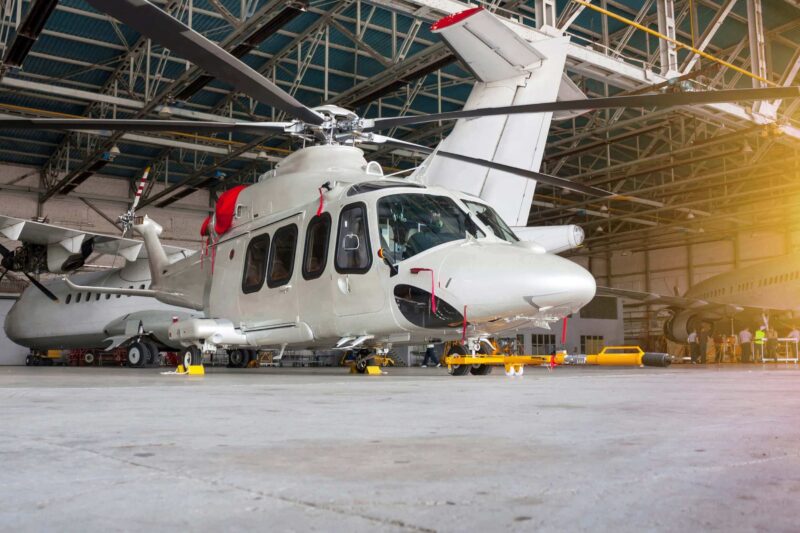
The prototype system will be tested on both an aircraft and a helicopter, covering use cases relevant to civil as well as military aviation.
Impact beyond aviation
The benefits extend beyond inspection accuracy alone. The system reduces physical strain on technicians and allows inspections to be carried out under safer working conditions.
In addition, the project supports broader sustainability goals. Lightweight composite materials reduce fuel consumption, but their wider adoption depends on reliable inspection methods. By lowering uncertainty around safety and maintenance costs, this innovation helps remove barriers to using composites at scale.
The solution is being developed in a modular way, making it adaptable to other industries where composite structures are used, such as wind energy and maritime applications.
Sponsors

Interreg Vlaanderen Nederland