Aircraft Composite Structure: Inspection, Fabrication, Damage Assessment and Repair, Level 1
Composite Repair Level 1, Composites Level 1, SAE AIR4938 Part 1
Meets EASA, FAA and OEM SRM Standards
Classroom
8h
Practical
32h
Online
no info
Upcoming Training Schedules
View upcoming training sessions for this course. Contact us to reserve your spot!
Interested in attending?
Click on any training event above to open the request form with the date automatically filled!
For Whom
Prerequisites
Scope and Purpose
Course Includes
* 5.5 Theoretical Hours
* Theoretical Assignments
* Practical Assessments
* Personal Protection Equipment
* Access to the ACRATS E-learning Platform
* Task Logbook
* Certificate of Achievement
Learning Outcomes
Selection Learning Goals
* Recognize composite applications across industries (aviation, aerospace, wind energy, automotive) and recent material advancements
* Interpret and apply the warp clock, ensuring correct laminate orientation, balance, and symmetry
* Perform wet lay-up and vacuum bagging, controlling resin distribution, bleed, and air evacuation
* Assess and repair composite damage, identifying delaminations, cracks, fiber fractures, and core damage, using NDI methods (Tap Testing, Ultrasound, Thermography)
* Mix resins correctly, ensuring proper ratios, pot life management, and exothermic control
* Execute structural composite repairs, including scarf and stepped repairs, following SRM procedures, taper ratios, and bonding techniques
* Process and repair sandwich panels, shaping and bonding Nomex®, carbon, and polyurethane foam cores, applying core plug repairs
* Apply vacuum bagging techniques, including bleeder/breather sequencing, pleat installation, leak testing, and pressure monitoring
* Work with bonding and adhesive techniques, including co-curing, secondary bonding, and resin thickening using microballoons
* Identify and prevent failure modes, such as fiber misalignment, bonding defects, porosity, and delaminations
* Follow composite repair documentation, ensuring compliance with manufacturer-approved SRM techniques and quality control standards
Additional Information
Standards
Meets EASA, FAA and
OEM SRM Standards
Focus
composite inspection and NDI; wet lay-up process; laminate orientation and resin mixing; vacuum bagging basics; repair techniques on simple structures
Modules & Topics
| Module & Hours | Title & Description |
|---|---|
|
Module 1
|
Introduction to Composites; Materials and Structures
In Module 1, we will discuss the increasing use of composite materials across various industries over the years. Participants will learn how composites have transformed sectors such as wind energy, automotive, aerospace, and construction. The discussion will also focus on the evolution of composite usage in aviation, showcasing its growing importance in modern airframes, from the F-16 to the F-35, from the Boeing 777 to the Boeing 787, and from the Airbus A320 to the Airbus A350.
Topics:
•
* 1. Historical Growth
•
* 2. Industry Adoption
•
* 3. Key Benefits of Composites
•
* 4. Terminology
•
* 5. Increasing Use in Modern Airframes
•
* 6. Future Trends and Applications
•
* 7. Applications and Recent Developments in Composite Materials
|
|
Module 2
|
Health, Safety and Environment
In Module 2, we will discuss the critical safety aspects of working with composite materials. Safety is our highest priority, and understanding these principles is essential before starting any practical work. Participants will learn how to identify potential hazards, use appropriate Personal Protective Equipment (PPE), handle materials safely, and ensure compliance with safety standards in the workplace. This module emphasizes proactive safety practices to prevent accidents and ensure a safe working environment. Additionally, participants will gain knowledge of recognizing and understanding cautions and warnings in source documentation to further enhance safety awareness.
Topics:
•
* 1. Material Safety Data Sheet (MSDS)
•
a. Purpose
•
b. Usage
•
c. Accessibility
•
* 2. Personal Protective Equipment (PPE)
•
a. Safety Shoes
•
b. Hearing Protection
•
c. Fall Protection
•
* 3. Composite-Specific PPE
•
a. Coveralls
•
b. Goggles
•
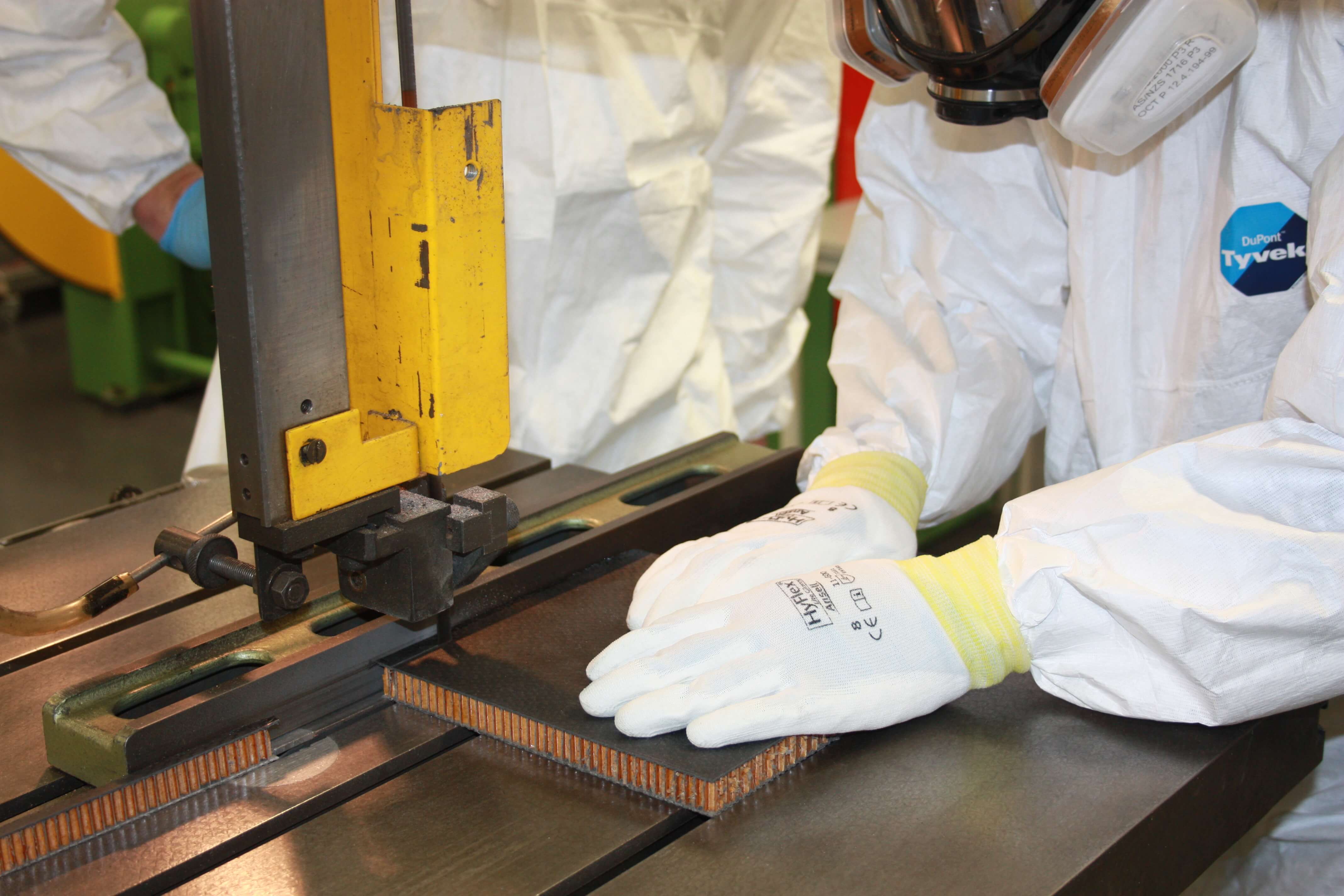
c. Dust Masks
•
d. Full-Face Masks
•
e. Gloves (Types and Applications)
•
* 4. Resin Mixing Safety
•
a. Risks
•
b. PPE Requirements
•
c. Handling Exothermic Reactions
•
* 5. Workplace Safety
•
a. Facility Layout
•
b. Ventilation
•
c. Waste Disposal
•
d. Equipment Safety Symbols
•
* 6. Epoxy Allergies
•
a. Causes
•
b. Prevention
•
c. Management
•
* 7. Carbon Fiber Handling
•
* 8. Exothermic Reactions
•
* 9. Safety Symbols & Warnings
|
|
Module 3
|
Fundamentals of Fiber Reinforced Plastics
In Module 3, we will explore the core principles of fiber-reinforced plastics, a key subset of composites. Participants will learn the definition of composites, understand what makes a material a composite, and discover the unique advantages these materials offer over metals, including fatigue resistance. The module also introduces the two main construction types, common fibers, and fiber technologies, providing a solid foundation for working with these advanced materials.
Topics:
•
* 1. Definition of Composites & FRPs
•
* 2. Composite Components
•
a. Fibers
•
b. Resin
•
c. Matrix
•
* 3. Composite Advantages Over Metals
•
* 4. Construction Types
•
a. Monolithic
•
b. Sandwich
•
* 5. Common Fibers
•
a. Glass
•
b. Carbon
•
c. Aramid
•
* 6. Fiber Technology & Weave Styles
•
Key Terms: Warp, Weft, Bias, Laminate
•
* 7. Prepreg Materials
•
a. Definition
•
b. Uses
•
c. Benefits
|
|
Module 4
|
Warp Clock and Laminate Orientation
In Module 4, we will explain the importance of fiber orientation and its impact on laminate strength. Participants will learn about the warp clock, stacking sequences, and the significance of balanced versus asymmetric laminates. Understanding these principles is crucial to ensuring optimal strength and durability in composite structures. The module also highlights how to use drawings to extract orientation details, understand laminate buildup based on manufacturer specifications, and introduces the Structural Repair Manual (SRM) as a reference for orientation and buildup information.
Topics:
•
* 1. Fiber Orientation
•
a. Strength in the Warp (Longitudinal) Direction
•
b. The Need for Strength in Multiple Directions
•
c. Consequences of Improper Orientation
•
* 2. The Warp Clock
•
a. Definition and Purpose
•
b. How to Work with the Warp Clock
•
c. Importance of the Warp Clock
•
d. Consequences of Failure to Comply with Warp Clock Specifications
•
e. Relation Between Standard Warp Clock and Counterclockwise Warp Clock (Left-Hand Grid/Right-Hand Grid)
•
* 3. Laminate Structures
•
a. Balanced Laminate vs. Asymmetric Laminate
•
* 4. Practical Application
•
a. Using Drawings for Orientation Details
•
b. Understanding Laminate Buildup (e.g., Ply Sequence, Orientation, and Material Specifications)
•
c. Introduction to the SRM as a Reference for Orientation and Buildup Information
|
|
Module 5
|
Warp Clock and Laminate Orientation
In Module 5, we will focus on mixing resins safely, correctly, and effectively. Participants will learn about resin types, mixing ratios, and how to ensure precision in their work. Emphasis will be placed on understanding critical information such as pot life, shelf life, and how to properly reference labels and datasheets to maintain quality and safety standards. The module also emphasizes minimizing waste and correctly disposing of excess resin to reduce environmental impact.
Topics:
•
* 1. Types of Resins: Epoxy & Polyester
•
* 2. Mixing Ratios: Understanding & Application
•
* 3. Pot Life & Shelf Life: Definitions & Importance
•
* 4. Datasheets & Labels
•
a. Keeping Labels Clean & Legible
•
b. Accessing & Interpreting Datasheets
•
* 5. Mixing Techniques & Tools
•
* 6. Mixing Methods: Volume vs. Weight-Based
•
* 7. Resin Calculation: Based on Fabric Weight
•
* 8. Preventing Exothermic Reactions
•
a. Maximum Allowable Quantities
•
b. Safe Mixing & Temperature Monitoring
•
* 9. Excess Resin Handling & Disposal
•
* 10. Safety Considerations: PPE, Ventilation & Waste Disposal
|
|
Module 6
|
Fabric Impregnation for the Wet Lay-Up Process
In Module 6, we will explore the step-by-step process of fabric impregnation in the wet lay-up procedure. Participants will learn how to prepare, impregnate, and handle fabric for consistent and high-quality results. This module also introduces the benefits and limitations of wet lay-up compared to pre-preg materials, highlighting the importance of proper technique and curing methods.
Topics:
•
* 1. Preparation for Impregnation
•
a. Marking: Shape, Ply Number, Orientation, Warp Direction
•
b. Accurate Labeling for Laminate Buildup
•
* 2. Impregnation Process
•
a. Proper Resin Application Techniques
•
b. Tools for Resin Distribution (e.g., Squeegee)
•
c. Removing Excess Resin & Maintaining Quality
•
* 3. Transition to Pre-Preg Materials
•
a. Advantages: Consistent Resin Content & Controlled Curing
•
b. Disadvantages: Dependence on Heat Sources
•
* 4. Comparison: Wet Lay-Up vs. Pre-Preg Methods
•
* 5. Curing Methods
•
a. Room-Temperature Curing (Wet Lay-Up)
•
b. Heat Curing (Pre-Preg Materials)
•
c. Comparison: Wet Lay-Up vs. Pre-Preg
|
|
Module 7
|
Monolithic and Sandwich Construction in Composites
In Module 7, we will explore the principles of monolithic and sandwich construction, their advantages, and the factors that contribute to their strength. Participants will learn about material selection, core materials, and different configurations and applications. Key topics include bonding techniques, material handling, and methods for customizing both monolithic and sandwich structures. Special attention is given to proper handling procedures to prevent contamination and maintain structural integrity.
Topics:
•
* 1. Overview of Composite Construction
•
a. Monolithic Construction: Properties & Applications
•
b. Comparison: Monolithic vs. Sandwich Structures
•
c. Strength Factors in Composite Construction
•
* 2. Types of Core Materials (for Sandwich Structures)
•
a. Foam, Urethane, Wood
•
b. Honeycomb: Nomex, Aluminum, Glass Fiber, Aramid
•
c. Honeycomb Configurations: Hexagonal, Overexpanded, Flexible Core
•
* 3. Key Terms in Composite Construction
•
a. Monolithic vs. Honeycomb Panel Terminology
•
b. W and L Directions & Their Significance
•
* 4. Bonding Techniques
•
a. Wet Lay-Up vs. Post-Curing Panel Bonding
•
b. Microballoons for Resin Thickening
•
c. Adhesive Options: Resin, Film Adhesive, Foaming Adhesive
•
* 5. Preparation & Customization
•
a. Monolithic Panel Preparation: Cutting, Trimming, and Machining
•
b. Reducing Thickness in Monolithic Panels
•
c. Sandwich Panel Adjustments: Edge Trimming and Beveling
•
* 6. Handling Composite Materials
•
a. Gloves to Avoid Contamination
•
b. Preventing Damage from Oils, Grease & Physical Contact
|
|
Module 8
|
Inspection and Damage Assessment (NDI)
In Module 8, participants will learn the principles of damage inspection and assessment in composite materials. The module covers common types of damage, including punctures, delaminations, surface scratches, gouges, and disbonds. Special attention is given to the hidden dangers of composite damage, which can be more difficult to detect compared to metal structures. Participants will also learn about damage causes such as human factors, foreign object debris (FOD), bird strikes, and lightning strikes. Various inspection and detection methods will be covered, including tap testing, moisture ingress detection, ultrasonic bond testing, thermography, eddy current, and X-ray imaging.
Topics:
•
* 1. Introduction to Damage Inspection
•
a. Composite vs. Metal Damage
•
b. Hidden Damage Risks in Composites
•
c. Impact Visibility & Structural Risks
•
* 2. Common Causes of Damage
•
a. Human Factors
•
b. Foreign Object Debris (FOD)
•
c. Bird Strikes
•
d. Lightning Strikes
•
* 3. Types of Damage in Composite Materials
•
a. Delaminations, Disbonds, and Core Damage
•
b. Surface Scratches and Gouges
•
c. Moisture Ingress and Environmental Degradation
•
* 4. Inspection & Damage Detection Methods
•
a. Tap Testing: Manual & Automated (Woodpecker)
•
b. Moisture Ingress Detection in Glass Fiber Structures
•
c. Ultrasonic Bond Testing: Purpose & Application
•
d. Advanced Inspection Techniques (Short Discussion):
•
• Thermography
•
• Eddy Current Testing
•
• Dye Penetrant Testing
•
• X-Ray Imaging
|
|
Module 9
|
Machining of Composites
In Module 9, participants will learn the fundamental principles of machining composite materials. Unlike metals, composites require specialized techniques due to their layered structure, abrasiveness, and sensitivity to heat. This module covers milling, cutting, and trimming of composite structures, along with the challenges associated with tool wear, delamination, and fiber pull-out. Participants will gain an understanding of cutting tool selection, feed and speed optimization, and dust management. Special attention is given to damage prevention techniques and the importance of maintaining clean cutting edges to ensure structural integrity.
Topics:
•
* 1. Introduction to Composite Machining
•
a. Differences Between Metal and Composite Machining
•
b. Material-Specific Machining Challenges
•
* 2. Common Machining Processes
•
a. Milling
•
b. Cutting & Trimming
•
* 3. Machining Challenges & Defects
•
a. Delamination and Fiber Pull-Out
•
b. Heat Generation and Matrix Degradation
•
c. Tool Wear and Surface Quality
•
* 4. Cutting Tools & Techniques
•
a. Tool Types: Carbide, Diamond-Coated, PCD Tools
•
b. Effect of Tool Geometry on Composite Machining
•
c. Feed Rates, Spindle Speeds, and Coolant Considerations
•
* 5. Health & Safety in Composite Machining
•
a. Dust Extraction and Filtration Systems
•
b. Personal Protective Equipment (PPE)
|
|
Module 10
|
Vacuum Bagging Techniques
In Module 10, we will cover the principles and processes of vacuum bagging as a critical part of composite production and repair. Participants will learn about the construction of a vacuum bag, the purpose and requirements of its individual layers, and how to monitor and test vacuum performance. This module emphasizes the importance of proper setup, placement, and equipment usage to ensure high-quality results.
Topics:
•
* 1. Purpose of Vacuum Bagging
•
a. Role in Production & Repair
•
b. Benefits for Composite Integrity
•
* 2. Vacuum Bag Construction
•
a. Layers & Their Functions
•
i. Perforated Release Film
•
ii. Non-Perforated Release Film
•
iii. Bagging Film
•
iv. Pressure-Sensitive Tape
•
v. Breather/Bleeder
•
vi. Peel Ply
•
vii. Tacky Tape (Sealant Tape)
•
viii. Vacuum Port (Valve)
•
b. Layer Placement & Performance Requirements
•
* 3. Vacuum Port Placement
•
a. Correct Positioning & Issues from Improper Placement
•
* 4. Vacuum Pressure
•
a. Minimum Required Pressure (e.g., inHg)
•
b. Monitoring & Ensuring Consistent Pressure
•
* 5. Vacuum Sources
•
a. Vacuum Pump vs. Venturi Block: Uses & Differences
•
* 6. Leak Testing
•
a. Using a Leak Tester for Vacuum Bag Integrity
•
* 7. Advanced Applications
•
a. Vacuum Bags with Heat Mats & Role of Thermocouples
•
b. Theoretical Introduction to Heating Requirements (Level 2)
•
* 8. Release Agents & Molds
•
* 9. Purpose of Release Agents to Prevent Bonding to Molds
•
* 10. Tool Side vs. Bag Side of a Mold
|
|
Module 11
|
Repair Techniques on Composite Structures
In Module 11, we will cover essential repair methods for composite structures, focusing on scarf and stepped repairs, as well as sandwich construction repairs using core plugs. Participants will learn about the steps, tooling, and quality considerations required to perform effective repairs. This module introduces key definitions and terms essential for understanding the repair process, such as taper ratio and overlap. The module also highlights common failure modes, emphasizing the importance of precision and safety to ensure high-quality outcomes.
Topics:
•
* 1. Repair Methods
•
a. Scarf Repair: Process, Steps & Tooling
•
b. Stepped Repair: Process, Steps & Tooling
•
c. Sandwich Construction Repair
•
i. Replacing Honeycomb with a Core Plug
•
ii. Identifying & Replicating Core Orientation
•
iii. Key Considerations for Core Plug Placement
•
* 2. Failure Modes
•
a. Common Errors in Composite Repair (e.g., Sanding Through the Laminate)
•
b. Visual Examples of Mistakes & Consequences
•
c. Preventing Failure Through Quality Assurance & Proper Technique
•
* 3. Tooling for Repairs
•
a. Overview of Tools for Sanding, Grinding & Milling
•
b. Specific Tools for Scarf & Stepped Repairs
•
c. Tools for Preparing & Placing Core Plugs
•
* 4. Safety Considerations
•
a. Reference to Module 2 for General Safety Principles
•
b. Precautions During Sanding, Grinding & Core Plug Preparation
•
* 5. Quality Assurance
•
a. Importance of Inspection Throughout the Repair Process
•
b. Key Points for Verifying Repair Quality
•
c. Record Keeping for Traceability
|
|
Module 12
|
Quality Assurance- and Requirements
In Module 12, participants will learn the principles of quality assurance in composite manufacturing and repair. Ensuring structural integrity and compliance with industry standards is critical in aviation and aerospace applications. This module covers quality control procedures, inspection standards, documentation, and regulatory requirements that apply to composite structures. Participants will gain an understanding of material traceability, process verification, acceptance criteria, and defect evaluation. Special attention is given to non-conformities, corrective actions, and documentation best practices to maintain compliance with industry regulations and OEM specifications.
Topics:
•
* 1. Introduction to Quality Assurance
•
a. Importance of QA in Composites
•
b. Quality Control vs. Quality Assurance
•
* 2. Industry Standards and Regulatory Compliance
•
a. FAA, EASA, and Military Standards
•
b. OEM-Specific Requirements
•
* 3. Material Traceability and Process Control
•
a. Certification of Raw Materials
•
b. Batch Records and Material Shelf Life
•
c. Process Verification and Work Instructions
•
* 4. Inspection and Defect Evaluation
•
a. Dimensional Inspections and Tolerances
•
b. Visual Inspection and Surface Defect Analysis
•
c. Acceptance Criteria for Composite Structures
•
* 5. Handling Non-Conformities and Corrective Actions
•
a. Identifying and Reporting Non-Conformities
•
b. Root Cause Analysis and Corrective Actions
•
c. Documentation and Audit Requirements
|
|
Module 13
|
Practical Exercises
In Module 13, participants will apply their knowledge through hands-on assignments, including laminate production, damage simulation,
and repair processes such as scarf and stepped repairs, sandwich construction, and core plug placement. Participants will work with pre-
preg carbon fiber unidirectional tape to explore laminate orientation, balance, and symmetry. They will also gain experience with dry glass
fabric and liquid epoxy resin, learning vacuum bagging, bleeder, and breather concepts. The participant will manufacture sandwich panel
structures using prepreg glass and carbon fiber fabrics, Nomex® honeycomb, and polyurethane foam core materials, applying laminate
nesting techniques for optimal strength and efficiency. The module reinforces warp clock, taper ratio, and laminate orientation, with a
strong focus on safety and minimizing material waste. Participants will also perform wet layup repairs, and on the final day, their repaired
parts will be cut and evaluated for quality assessment. This hands-on experience builds technical expertise and confidence, preparing
participants for real-world composite repair applications.
|
|
Module 14
|
Practical Exercises – Assessment Criteria
The assessment criteria are designed to reflect the logical progression of the training program, ensuring participants are evaluated on
their ability to apply knowledge and skills at every stage:
1. Safety and foundational concepts (Modules 2, 3, 4, 7, 8): This section lays the groundwork, focusing on safe working practices,
understanding core concepts (such as the warp clock and sandwich construction), and identifying damage in composite structures.
2. Technical skills and process control (Modules 5, 6, 9):Participants are then assessed on the practical skills required for production
processes, including resin mixing, fabric impregnation, and vacuum bagging.
3. Repair techniques (Modules 7, 10): This section evaluates participants’ ability to perform specific repair methods, such as scarf
repairs and core plug placement, with an emphasis on quality assurance.
4. Application in practical assignments (Module 11): Finally, all previously acquired skills are integrated into hands-on exercises, where
participants demonstrate their ability to apply knowledge in real-world scenarios, ensuring safety and high-quality results.
|
|
Module 15
|
Written Test
The written test shall contain a minimum of 20 multiple choice questions.
|
Introduction to Composites; Materials and Structures
Health, Safety and Environment
Fundamentals of Fiber Reinforced Plastics
Warp Clock and Laminate Orientation
Warp Clock and Laminate Orientation
Fabric Impregnation for the Wet Lay-Up Process
Monolithic and Sandwich Construction in Composites
Inspection and Damage Assessment (NDI)
Machining of Composites
Vacuum Bagging Techniques
Repair Techniques on Composite Structures
Quality Assurance- and Requirements
Practical Exercises
Practical Exercises – Assessment Criteria
Written Test
Top companies offer this course to their employees
This course was selected for our collection of top-rated courses trusted by businesses worldwide. Learn more